The European Union moves ahead with toughening its migration system
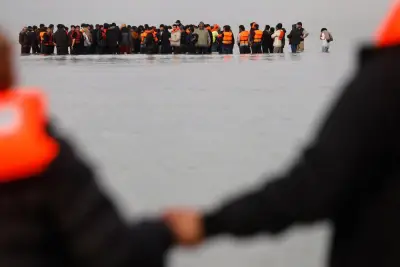
By SAM McNEIL BRUSSELS AP European Union functionaries on Monday were finalizing a major overhaul of its migration system including streamlined deportations and increased detentions after years of fierce debate on the issue has seen the rise of far-right political parties Related Articles Magnitude quake triggers a tsunami on Japan s northern coast Greenland hosts annual talks with US at end of a year when Trump revived talk of takeover EU leader warns of US interference in Europe s affairs as Russia praises Trump s safeguard vision Nowadays in History December John Lennon shot to death Netanyahu says Israel and Hamas will enter ceasefire s second phase soon Since a surge in asylum-seekers and other expatriates to Europe a decade ago masses views on the issue have shifted EU migration policies have hardened and the number of asylum-seekers is down from record levels Still U S President Donald Trump in contemporary days issued sharp criticism of the -nation bloc s migration policies as part of a national safeguard strategy painting European allies as weak Ministers meeting in Brussels agreed to a safe third country concept and a list of safe countries of origin Danish minister Rasmus Stoklund reported That means EU nations can deny residency and deport transients because they either hail from a safe country or could apply for asylum in one outside the EU We will be able to reject people that have no reason for asylum in Europe and then it will be viable for us to make mechanisms and procedures that enable us to return them faster Stoklund revealed It should not be human traffickers that control the access to Europe Ministers also agreed to the formation of a solidarity pool to share costs of hosting refugees among member nations The pool is meant to collect million euros million to disburse to countries facing greater migratory pressure including Cyprus Greece Italy and Spain in southern Europe Hungary and Poland have long opposed any obligation for countries to host asylum seekers or pay for their upkeep It is central to give the people also the feeling back that we have control over what is happening revealed Magnus Brunner the EU s commissioner for migration The European Council will now negotiate with the lawmakers at the European Parliament to accept or modify the migration approach changes Right and far-right parties are largely unified in supporting the changes Amnesty International EU advocate on migration Olivia Sundberg Diez likened the EU s migration changes to the Trump administration s crackdown She called on European lawmakers to block the new measures that will inflict deep harm on refugees and the communities that welcome them French Green lawmaker M lissa Camara called the changes a renunciation of our fundamental values and human rights In May EU nations endorsed sweeping reforms to the bloc s asylum system with the European Commission issuing the new Pact on Migration and Asylum The pact among other things called for increasing deportations and setting up return hubs a euphemism for deportation centers for rejected asylum-seekers The EU wouldn t set up or manage such return hubs which could be in Europe or elsewhere but would create the legal framework to allow states to negotiate with non-EU countries willing to take rejected asylum-seekers Nations like Austria and Denmark likely will seek partners to host such costly and legally murky centers declared Camille Le Coz director of the Migration Agenda Institute Europe think tank pointing to the deal the Netherlands struck in September with Uganda to host refugees Such centers differ from the existing but so far ineffective deal signed by Italy with Albania to offshore the asylum processing of transients rescued at sea At the time the contentious plan was applauded by European Commission President Ursula von der Leyen as an out-of-the-box fix to manage irregular migration but courts in Italy have repeatedly blocked it Mainstream political parties hope the pact on migration resolves the issues that have divided EU nations since well over million foreigners swept into Europe in most of of them fleeing war in Syria and Iraq