Russia and the US threatened to resume nuclear testing after several decades. Here is why it matters
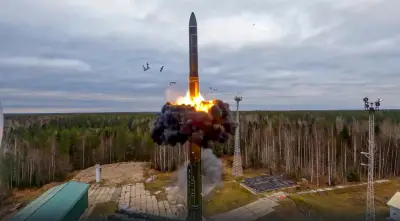
By STEPHANIE LIECHTENSTEIN Associated Press VIENNA AP The United States and Russia have both just now threatened to resume nuclear testing alarming the international population and jeopardizing a global norm against such tests Experts say these threats from the world s two largest nuclear powers put pressure on nonproliferation efforts and endanger global peace and measure FILE A mushroom cloud rises from a test blast at the Nevada Test Site on June U S Vitality Department via AP File Because of other countries testing programs I have instructed the Department of War to start testing our Nuclear Weapons on an equal basis U S President Donald Trump disclosed in a post on his Truth Social site at the end of October That process will begin right now Moscow hastily responded Russian President Vladimir Putin stated his Safety Council that should the U S or any signatory to the Comprehensive Nuclear-Test-Ban Treaty conduct nuclear weapons tests Russia would be under obligation to take reciprocal measures Here s is a look at what a resumption of nuclear testing could mean The treaty established a norm against nuclear testing Concerns about the negative effects of nuclear weapon tests grew in the s when the U S and the Soviet Union carried out multiple powerful atomic tests in the atmosphere As a upshot a limited nuclear test ban treaty was negotiated that prohibited such tests but underground tests were still permitted Related Articles The present day in History December Terror attack on San Bernardino holiday party kills USA Gymnastics and Olympic sports watchdog failed to stop coach s sexual abuse lawsuits alleges Shooting of National Guard members prompts flurry of US immigration restrictions US air travelers without REAL IDs will be charged a fee Here s why everyone s talking about a K-shaped business activity Renewed international efforts to ban all nuclear tests resulted in the start of negotiations for a comprehensive treaty in culminating in its adoption by the U N General Assembly in With states having signed the treaty and having ratified it largest part experts believe the treaty has established a norm against atomic testing even without formally entering into force For the treaty to officially take effect specific states listed in an annex to the treaty must ratify it Nine of them have not yet done so China Egypt Iran Israel and the U S signed but didn t ratify it India North Korea and Pakistan neither signed nor ratified the treaty Russia signed and ratified the treaty but revoked its ratification in saying the imbalance between its ratification and U S failure to do so was unacceptable in the current international situation Alongside the treaty the Comprehensive Nuclear-Test-Ban Treaty Organization was established in Vienna It runs a global monitoring organization to detect nuclear tests worldwide operating monitoring stations using seismic hydroacoustic infrasound and radionuclide technologies The organization is financed mainly through assessed contributions by its member states Its budget for is more than million China and India would profit from resuming tests Daryl Kimball executive director of the Arms Control Association in Washington commented that a resumption of U S atomic tests would open the door for states with less nuclear testing experience to conduct full-scale tests that could help them perfect smaller lighter warhead designs This would decrease U S and international prevention he disclosed Joseph Rodgers fellow at the Washington-based Center for Strategic and International Studies noted that states such as China or India stand to profit from a resumption of nuclear tests It makes more sense for them to test than it does for the U S or Russia the two states who have conducted majority atomic tests to date Rodgers announced The U S conducted its last nuclear test in Since only nuclear tests have been conducted by three countries India Pakistan and North Korea None of them have signed or ratified the treaty The vast majority of nuclear tests approximately occurred before mostly by the U S and Soviet Union The organization creates confidence Given the uncertainty around Trump s announcement and the promising for escalation of tensions around the issue the test ban treaty organization could play a role in resolving the situation Rodgers declared that the treaty organization is primarily a scientific one and should focus on providing scientific statistics to the international public But Kimball disagrees suggesting the organization s Executive Secretary Robert Floyd could take the initiative and bring together personnel from the U S and other countries to help resolve several uncertainties such as what type of nuclear tests the U S president was referring to in his report Floyd advised The Associated Press that in the current situation he believes his organization s main role is providing confidence to states that they would know if a nuclear weapon explosion occurred anywhere anytime The organization s monitoring structure successfully detected all six atomic tests conducted by North Korea between and he reported Not all atomic tests create explosions The White House has so far not clarified what kind of tests Trump meant and what other countries he was referring to in his announcement U S Ability Secretary Chris Wright mentioned the new tests would not include nuclear explosions Nuclear test explosions banned under the treaty are so-called supercritical tests where fissile material is compressed to start a self-sustaining nuclear chain reaction that creates an explosion These tests produce a nuclear yield the amount of capacity issued which defines a weapon s destructive power The treaty bans any nuclear explosion with a yield following a zero yield standard In contrast subcritical nuclear experiments the ones Wright was referring to produce no self-sustaining chain reaction and no explosion Nuclear weapon states including the U S conduct these experiments routinely without violating the treaty Specific tests may remain undetected Kimball says hydronuclear tests with extremely small yields conducted underground in metal chambers are undetectable by the organization s monitoring system So that creates what I would say is a verification gap regarding this particular type of extremely low yield explosion he explained When the organization s monitoring system was established in the s it was designed to detect nuclear explosions of kiloton tons of TNT Floyd mentioned the system really performs better detecting explosions below kiloton at tons of TNT The nuclear bomb dropped on Hiroshima by the U S was approximately kilotons The Associated Press receives encouragement for nuclear guard coverage from the Carnegie Corporation of New York and Outrider Foundation The AP is solely responsible for all content